Skip to content
Simba Beyond Africa Safaris
Gray Line SA
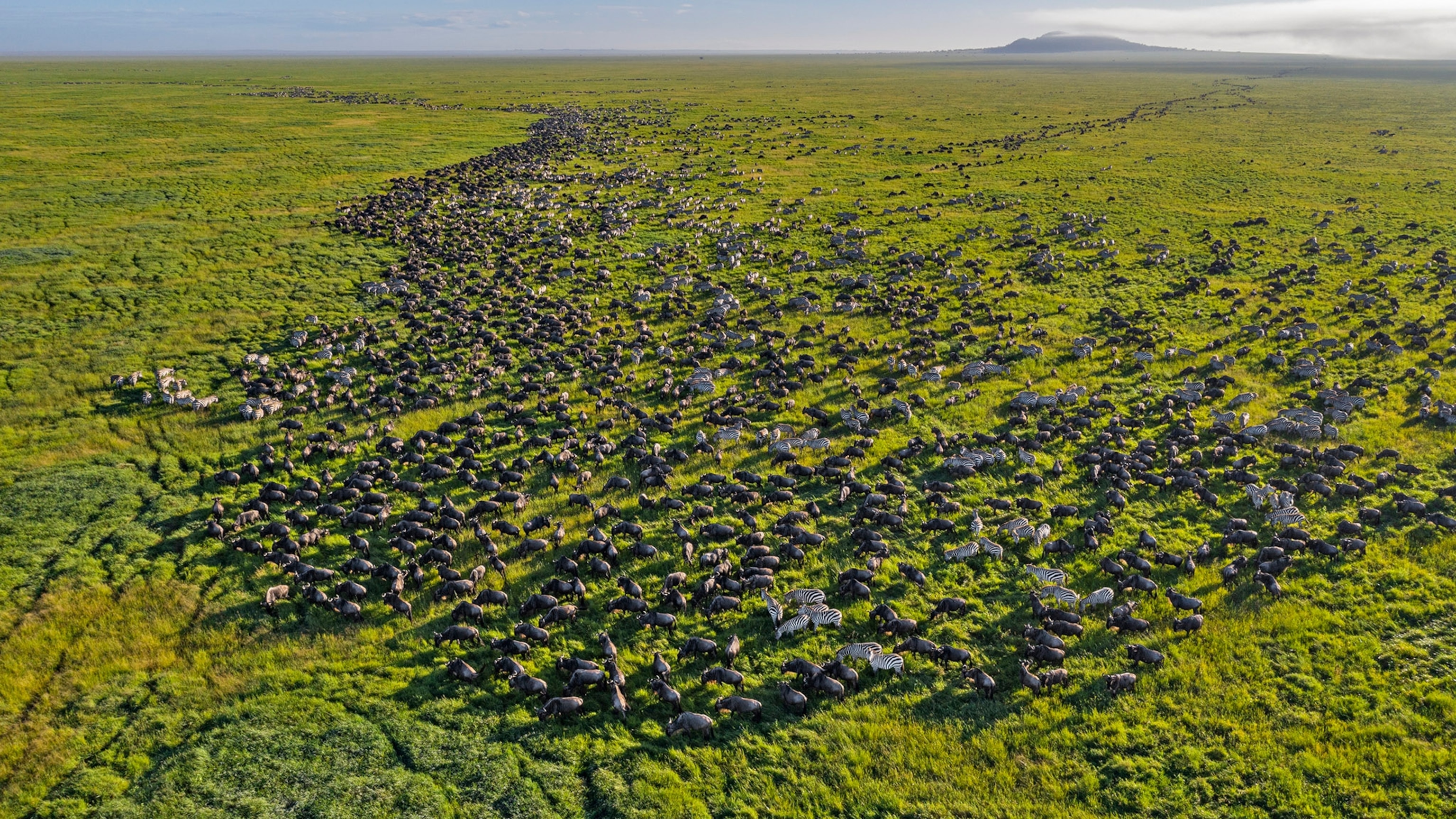
The Great Wildebeest Migration across the Serengeti plains — Africa's greatest wildlife spectacle
Expert-Ranked Guide 2026Updated May 2026

Top 10 Best African
Safari Parks

The definitive ranking of Africa's greatest wildlife destinations. Size, wildlife, best time to visit, highlights, and insider tips from our expert team.

7 Countries 9 Big Five Parks 1,000+ Species Covered
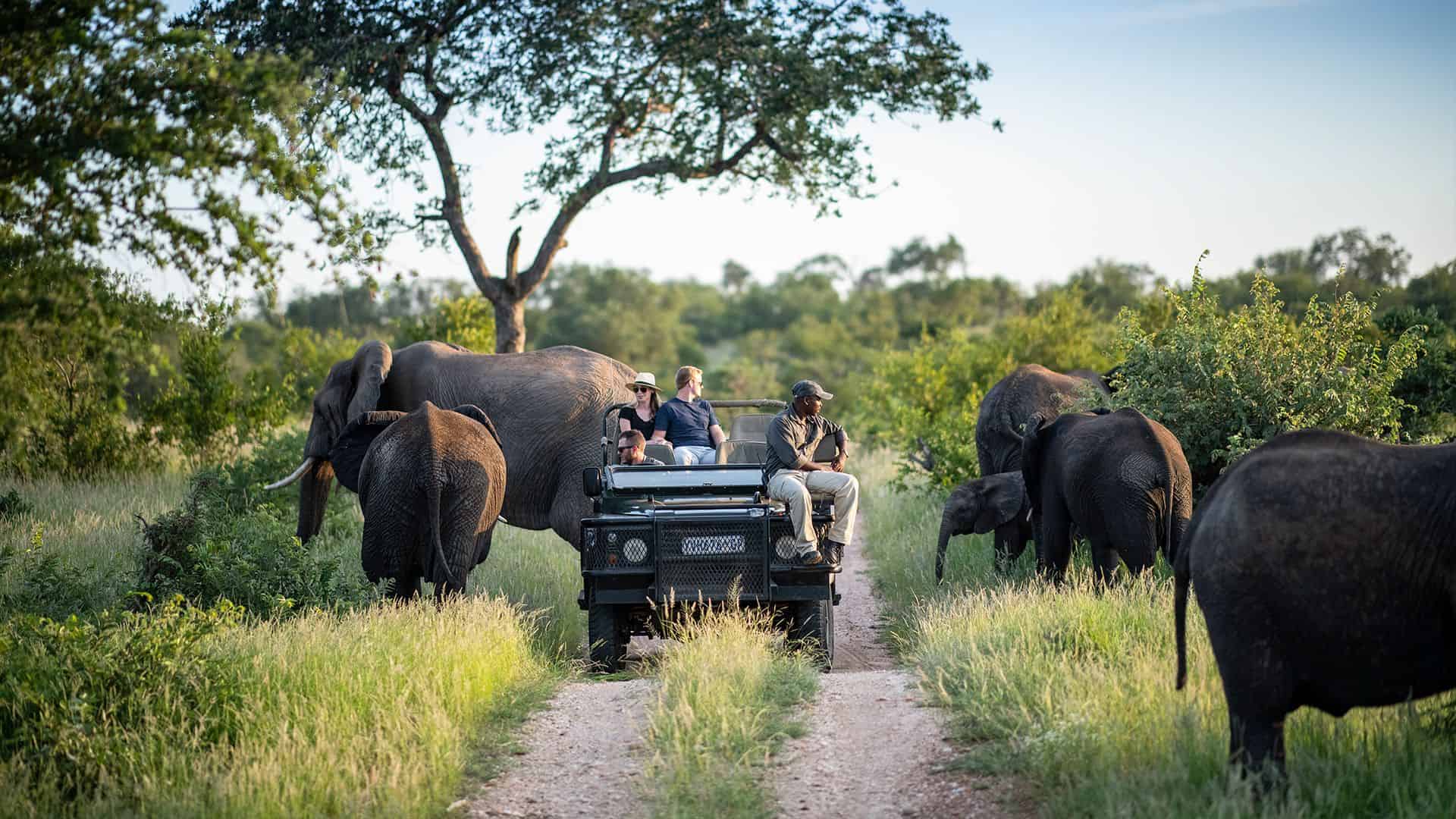
Kruger National Park, South Africa — one of Africa's best safari parks
#1
Big Five
South Africa

Kruger National Park

Larger than Israel — Africa's flagship reserve

Size

19,623 km²

Best Season

May – September

Mammals

147 species

Birds

500+ species

Why Visit Kruger National Park

The gold standard of African safaris. Kruger combines world-class wildlife density with infrastructure that makes it accessible for first-timers and veterans alike. The unfenced boundary with Sabi Sands means you get Kruger's ecosystem with exclusive lodge luxury.

Did You Know?

Kruger is the most biodiverse park in Africa with 147 mammal species, 500+ bird species, and 336 tree species — a living encyclopedia of African wildlife.

Top Highlights

All Big Five in a single park — one of only a handful in Africa
Self-drive safaris with excellent infrastructure & rest camps
Greater Kruger's unfenced private reserves (Sabi Sands, Timbavati) for exclusive experiences
The Panorama Route — Blyde River Canyon, God's Window, Bourke's Luck Potholes
147 mammal species — more than any other African game reserve
Night drives & bush walks in private concessions
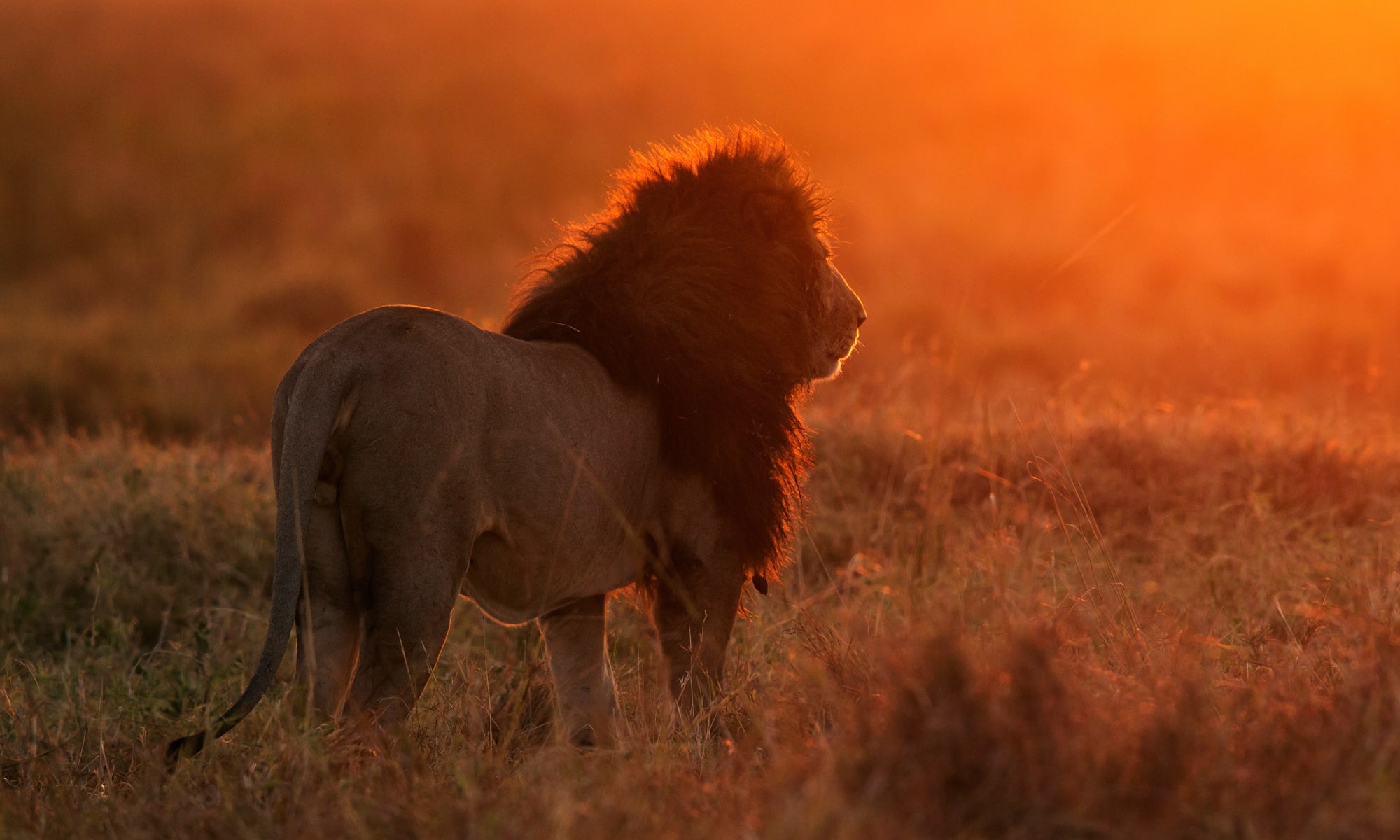
Serengeti National Park, Tanzania — one of Africa's best safari parks
#2
Big Five
Tanzania

Serengeti National Park

Roughly the size of Northern Ireland

Size

14,763 km²

Best Season

June – October

Mammals

80 species

Birds

500+ species

Why Visit Serengeti National Park

If you see one safari in your lifetime, make it the Serengeti during migration season. The sheer scale of 2.5 million animals moving across an endless plain, with predators shadowing every step, is the greatest wildlife spectacle on the planet.

Did You Know?

The Serengeti hosts the largest terrestrial animal migration on Earth — 2.5 million wildebeest, zebra and gazelles completing a clockwise 800km loop that has continued unbroken for millions of years.

Top Highlights

The Great Migration — 2.5 million animals on a 800km annual circuit
Dramatic Mara River crossings with massive crocodiles
Southern Serengeti calving season — 8,000 wildebeest born daily in Feb
Seronera Valley — Africa's best leopard sightings
Hot air balloon safaris at dawn over the endless plains
Kopjes (granite rock islands) sheltering lions and leopards
Masai Mara National Reserve, Kenya — one of Africa's best safari parks
#3
Big Five
Kenya

Masai Mara National Reserve

Compact but with Africa's highest wildlife density per km²

Size

1,510 km²

Best Season

July – October

Mammals

95 species

Birds

450+ species

Why Visit Masai Mara National Reserve

Kenya's crown jewel delivers the most accessible Big Five experience in East Africa. The Mara's compact size means wildlife encounters happen constantly, and the surrounding conservancies offer exclusive safaris away from the crowds.

Did You Know?

The Masai Mara has the highest concentration of large predators in Africa. You can realistically see lion, leopard, cheetah, hyena, and African wild dog all in a single day.

Top Highlights

Highest predator density in Africa — big cats everywhere
Dramatic wildebeest Mara River crossings (Jul–Oct)
Private conservancies for exclusive off-road & night safaris
Maasai cultural encounters — authentic warrior village visits
Hot air balloon safaris over the savanna at sunrise
Over 450 bird species including 57 raptors
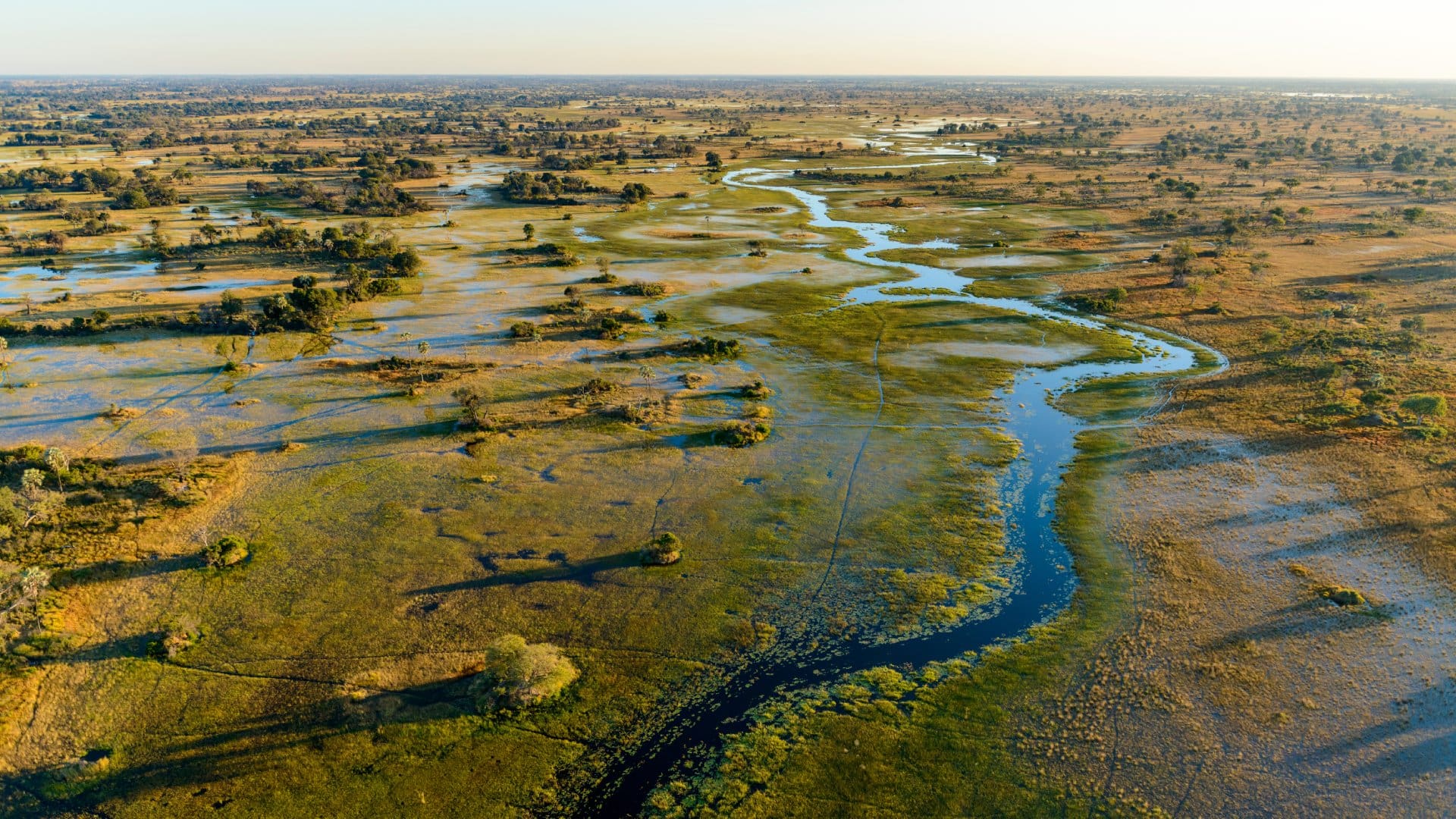
Okavango Delta, Botswana — one of Africa's best safari parks
#4
Big Five
Botswana

Okavango Delta

World's largest inland delta — a UNESCO World Heritage Site

Size

22,000 km² (flood extent)

Best Season

May – September

Mammals

122 species

Birds

444+ species

Why Visit Okavango Delta

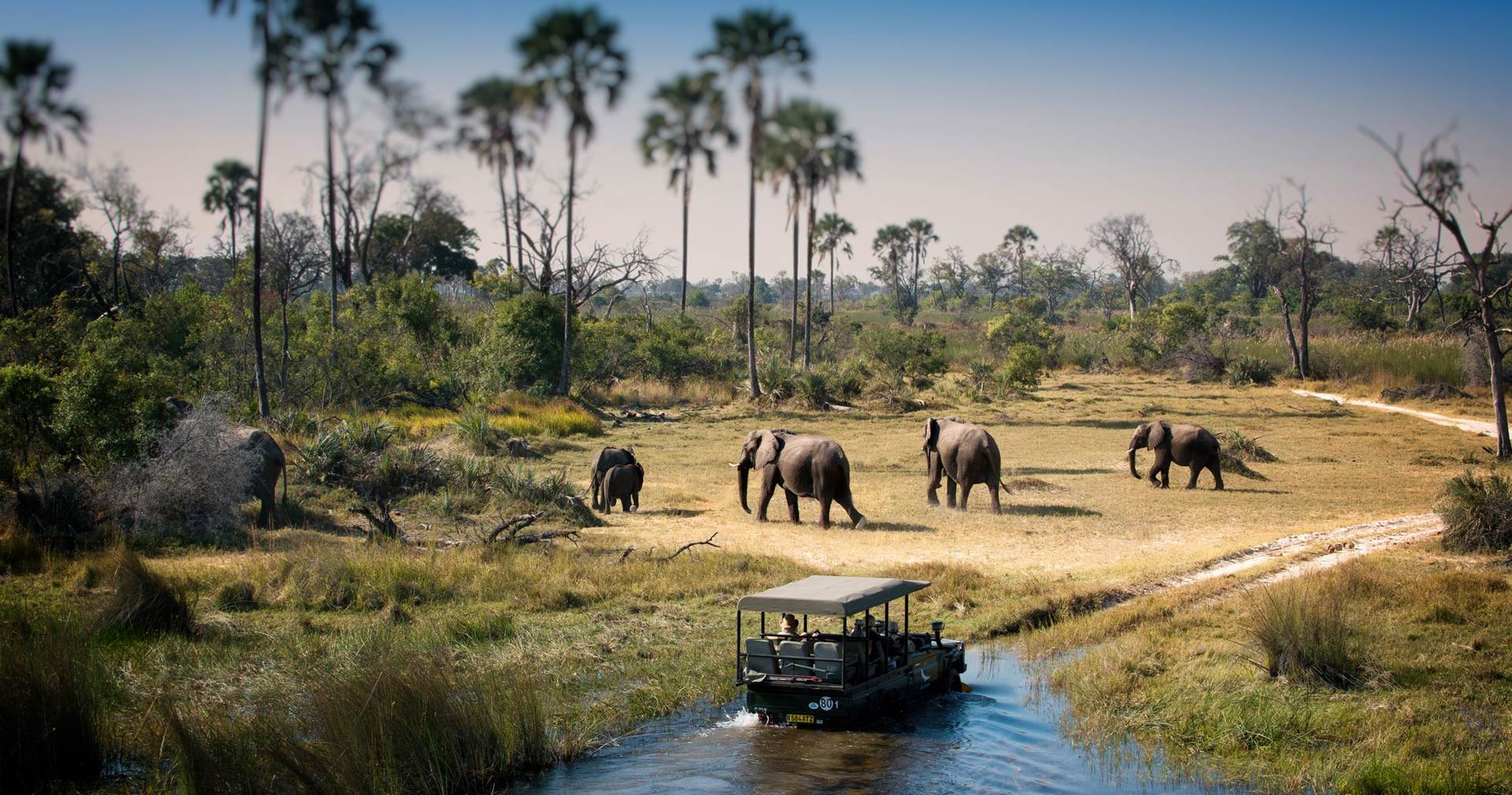
The Okavango offers Africa's most unique safari experience — gliding through crystal-clear channels by mokoro canoe, walking through pristine islands, and flying over one of Earth's most beautiful landscapes. Botswana's low-density tourism model means exclusivity is guaranteed.

Did You Know?

The Okavango is the only major river delta that empties into a desert instead of the ocean. Flood waters from Angolan rains take 6 months to reach Botswana, creating a reverse-season paradise.

Top Highlights

Mokoro (dugout canoe) safaris through lily-pad channels
Aerial helicopter flights over the fractal delta patterns
Africa's largest remaining wild dog population
Unique semi-aquatic leopards hunting in water
Over 200,000 elephants — Africa's highest concentration
Chief's Island — ground zero for Big Five walking safaris
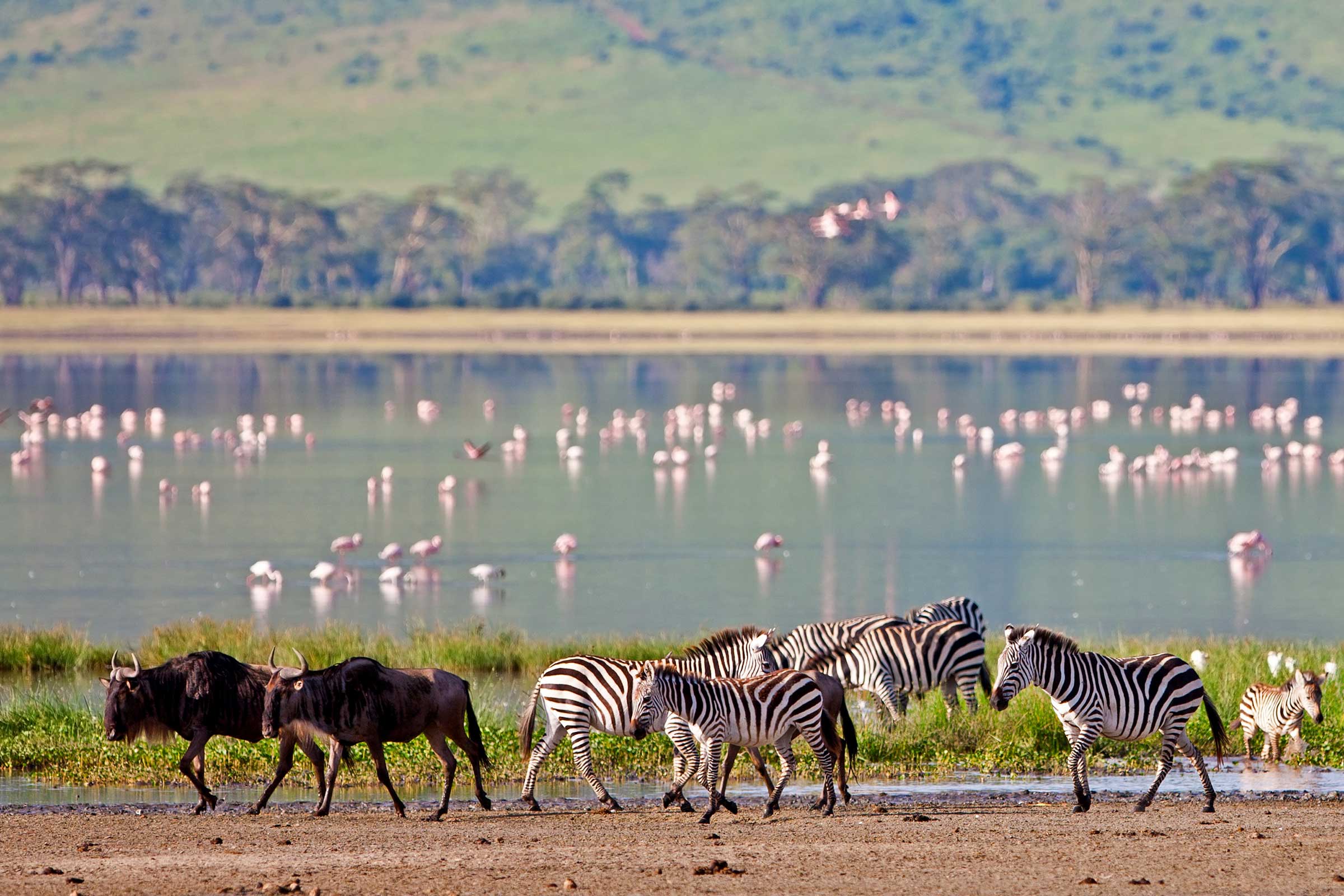
Ngorongoro Crater, Tanzania — one of Africa's best safari parks
#5
Big Five
Tanzania

Ngorongoro Crater

World's largest unbroken volcanic caldera — a natural amphitheatre

Size

260 km² (crater floor)

Best Season

June – October

Mammals

60 species

Birds

500+ species

Why Visit Ngorongoro Crater

Nowhere else can you see all Big Five in a single morning within a natural volcanic amphitheatre. The crater's enclosed ecosystem guarantees extraordinary wildlife density, and the dramatic 600-metre descent at sunrise is unforgettable.

Did You Know?

The Ngorongoro Crater is a collapsed volcano 2.5 million years old, creating a natural 260 km² enclosure where approximately 25,000 large animals live permanently — the highest density anywhere on Earth.

Top Highlights

World's highest predator density in a single enclosed area
Best place in East Africa to see critically endangered black rhino
Dramatic 600m descent into the caldera at dawn
Lake Magadi's flamingo flocks turning the soda lake pink
No giraffes inside — too steep for them to descend
Combine with Serengeti for the ultimate Tanzania safari
Chobe National Park, Botswana — one of Africa's best safari parks
#6
Big Five
Botswana

Chobe National Park

Botswana's first and most famous national park

Size

11,700 km²

Best Season

May – October

Mammals

120 species

Birds

450+ species

Why Visit Chobe National Park

Chobe delivers the most spectacular elephant encounters on the continent. Watching 100+ elephants swimming across the Chobe River at sunset, while lions wait on the opposite bank, is pure African magic. Combine with Victoria Falls for the ultimate Southern African trip.

Did You Know?

Chobe's Savuti marsh is famous for its pride of lions that have uniquely adapted to hunt adult elephants at night — one of the most extraordinary predator-prey dynamics anywhere in Africa.

Top Highlights

Africa's largest elephant concentration — herds of 50-100+ at river's edge
Sunset boat safaris on the Chobe River with elephants swimming across
Lions that have learned to hunt elephants and buffalo in water
Four distinct ecosystems in one park
Easy day trip from Victoria Falls (60km away)
Excellent photographic opportunities from water-level boat hides
Sabi Sand Game Reserve, South Africa — one of Africa's best safari parks
#7
Big Five
South Africa

Sabi Sand Game Reserve

Shares an unfenced border with Kruger — the ultimate luxury safari zone

Size

650 km²

Best Season

May – September

Mammals

145 species

Birds

350+ species

Why Visit Sabi Sand Game Reserve

If luxury is your language, Sabi Sand is where to speak it. This is the world's premier Big Five luxury safari destination, with lodges that rival the finest hotels on Earth and wildlife encounters that rival anywhere on the continent.

Did You Know?

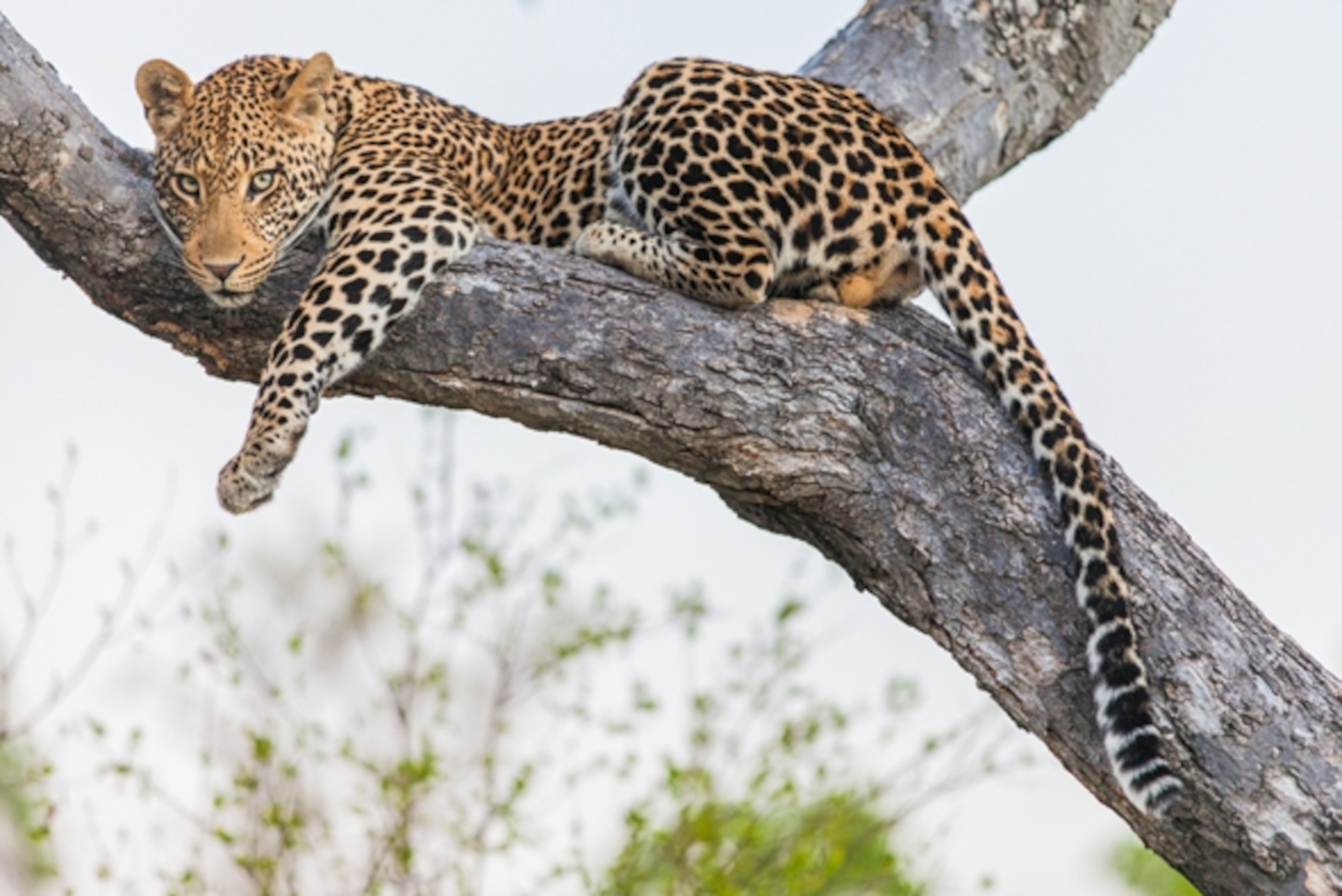
Sabi Sand is the leopard capital of the world. Rangers here have habituated leopards over decades, meaning you can watch these normally elusive cats hunt, feed, and raise cubs at incredibly close range.

Top Highlights

World's highest leopard density — virtually guaranteed sightings
Ultra-luxury lodges like Londolozi, Singita & MalaMala
Off-road tracking with expert rangers & Shangaan trackers
Walking safaris led by Big Five-certified guides
Unfenced boundary with Kruger — free-roaming wildlife
Private traversing areas — never more than 3 vehicles at a sighting
South Luangwa National Park, Zambia — one of Africa's best safari parks
#8
Zambia

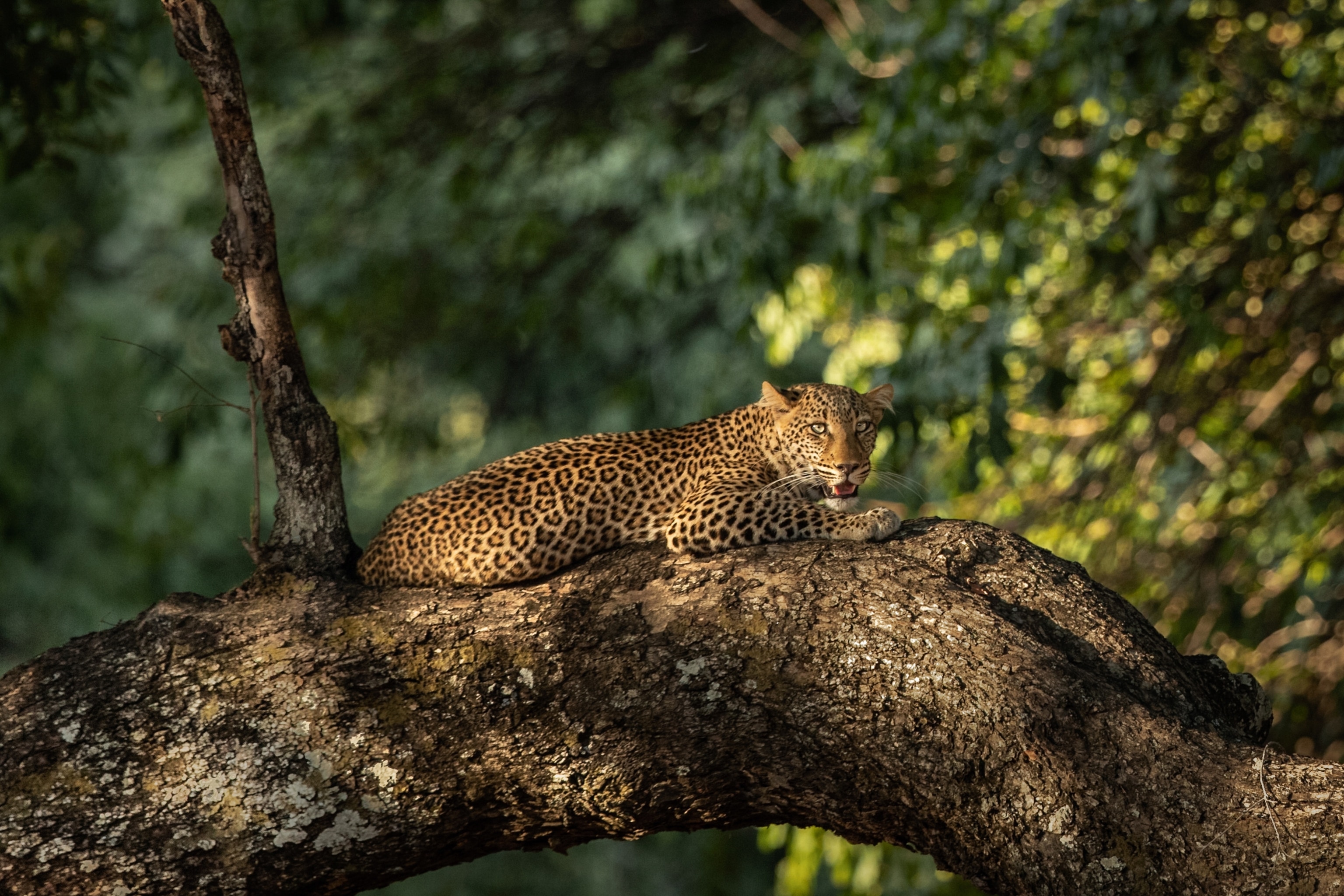
South Luangwa National Park

Zambia's premier wildlife sanctuary — the Valley of the Leopard

Size

9,050 km²

Best Season

June – October

Mammals

60 species

Birds

400+ species

Why Visit South Luangwa National Park

For purists who want to feel the bush beneath their feet, South Luangwa is sacred ground. Walking between temporary bush camps, tracking leopards on foot, and watching hippos from an unfenced camp verandah delivers the most raw, authentic safari experience in Africa.

Did You Know?

South Luangwa is the birthplace of the walking safari, invented by Norman Carr in 1950. Three mammal subspecies — Thornicroft's giraffe, Crawshay's zebra, and Cookson's wildebeest — exist here and nowhere else on Earth.

Top Highlights

Birthplace of the walking safari — pioneered here in 1950 by Norman Carr
Africa's highest leopard density — the "Valley of the Leopard"
Three endemic species found nowhere else: Thornicroft's Giraffe, Crawshay's Zebra, Cookson's Wildebeest
Night drives revealing nocturnal predators & honey badgers
Southern carmine bee-eaters nesting in riverbanks (Aug–Sep)
50 hippos per kilometre of river — Africa's densest population
Etosha National Park, Namibia — one of Africa's best safari parks
#9
Big Five
Namibia

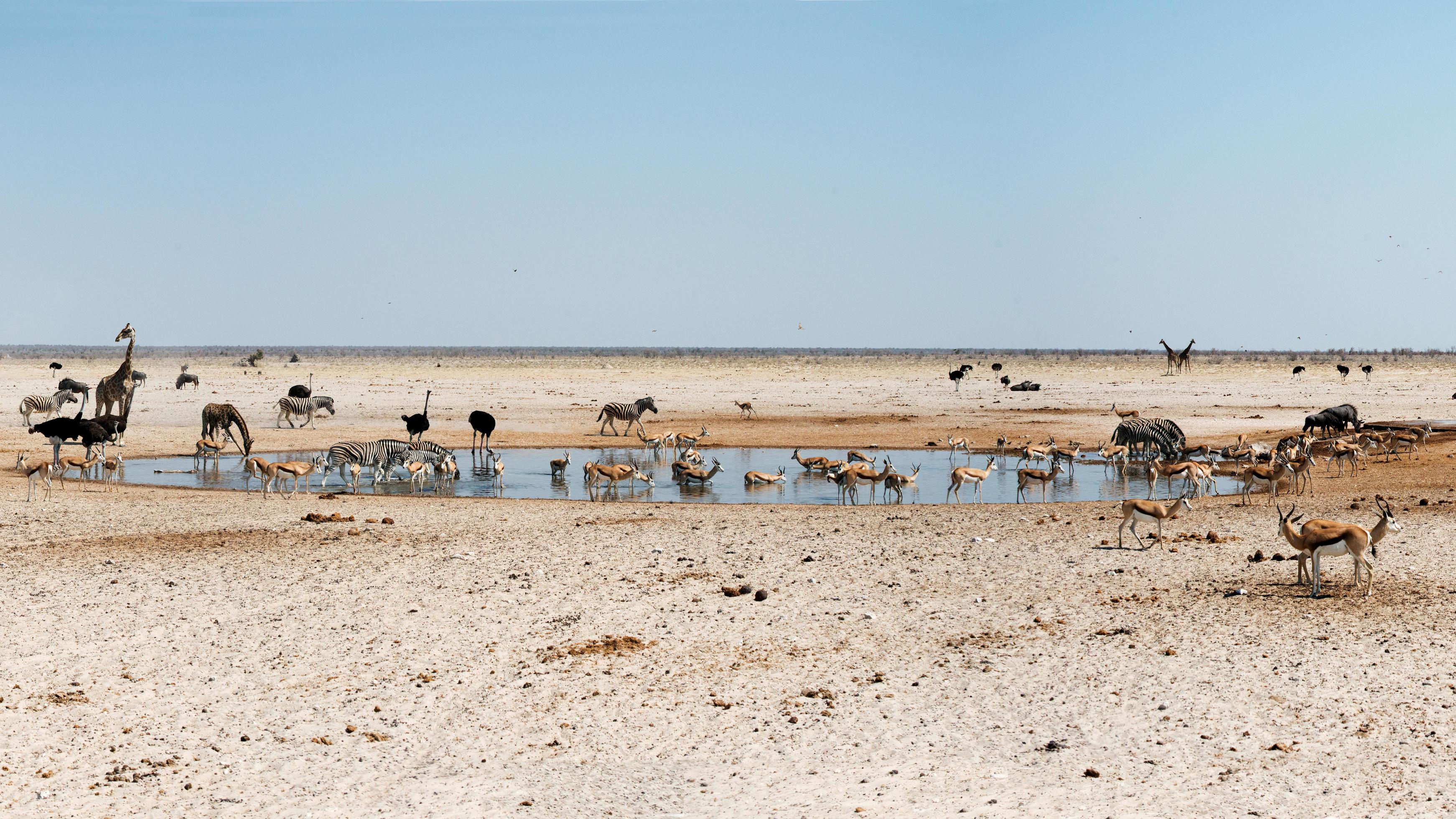
Etosha National Park

Dominated by a vast salt pan visible from space — Namibia's wildlife jewel

Size

22,270 km²

Best Season

May – October

Mammals

114 species

Birds

340+ species

Why Visit Etosha National Park

Etosha offers Africa's best-value safari and its most unique landscape. The combination of surreal salt pans, floodlit waterholes where you watch wildlife from your rest camp, and excellent self-drive infrastructure makes it perfect for independent travellers.

Did You Know?

Etosha's massive salt pan (4,800 km²) is so vast it's visible from space. After rains, it fills with shallow water, attracting millions of flamingos that turn the white surface pink — one of Africa's most surreal natural phenomena.

Top Highlights

Floodlit waterholes at rest camps — watch wildlife 24/7 from your camp chair
Surreal salt pan landscape visible from space — 4,800 km² of white crust
Best self-drive safari value in Africa — from $150/day
Exceptional black rhino sightings at waterholes (especially Okaukuejo)
Desert-adapted elephants traversing the otherworldly pan
Combine with Sossusvlei dunes & Skeleton Coast for the ultimate Namibia trip
Hwange National Park, Zimbabwe — one of Africa's best safari parks
#10
Big Five
Zimbabwe

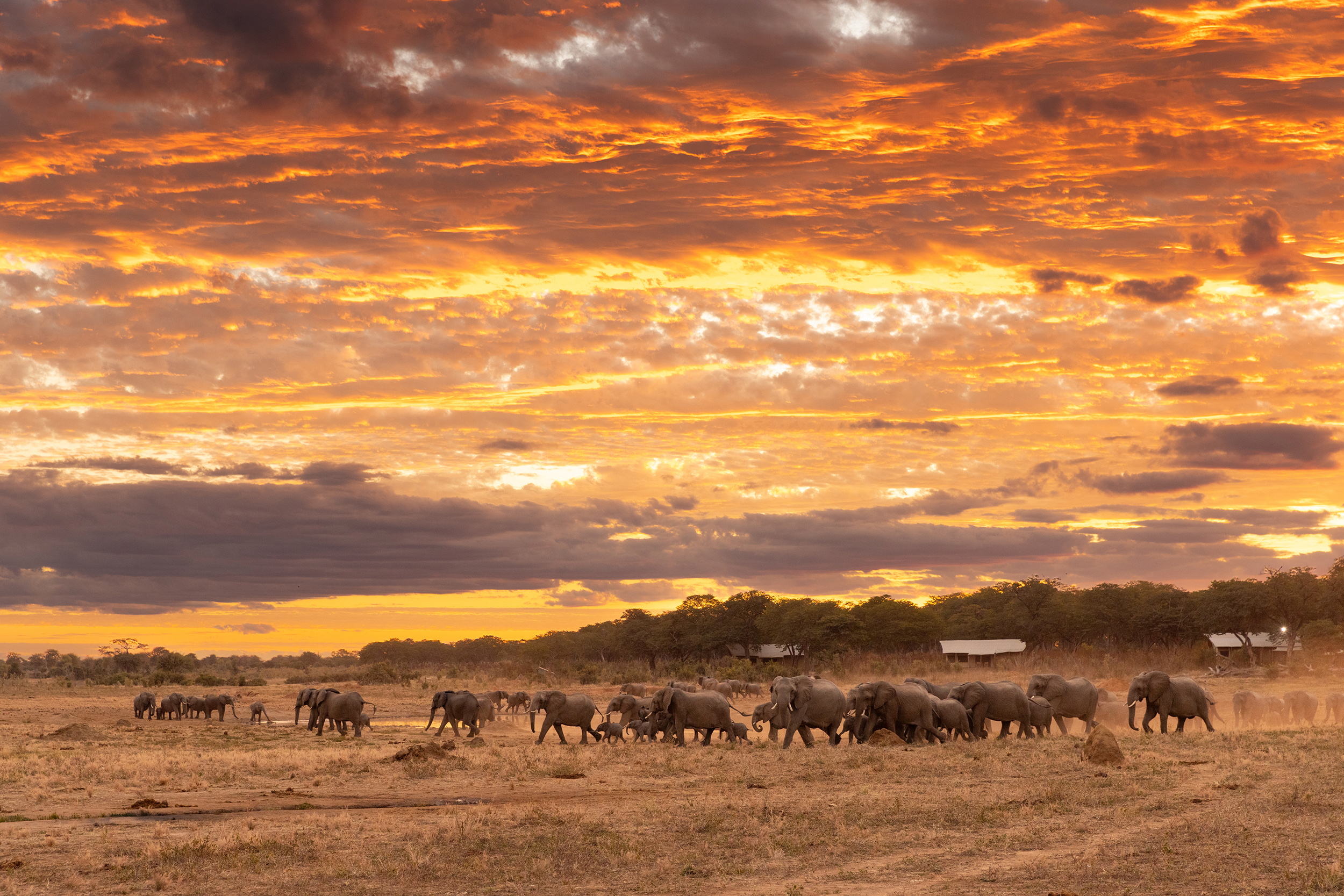
Hwange National Park

Zimbabwe's largest park — roughly half the size of Belgium

Size

14,651 km²

Best Season

July – October

Mammals

100 species

Birds

420+ species

Why Visit Hwange National Park

Hwange is Zimbabwe's answer to Kruger — vast, wild, and increasingly world-class. The sheer volume of elephants at waterholes, combined with excellent wild dog sightings and proximity to Victoria Falls, makes it a Southern African essential.

Did You Know?

Hwange's pumped waterholes, originally created by park warden Ted Davison in the 1930s, sustain up to 50,000 elephants during the dry season — making it one of the greatest elephant spectacles on Earth.

Top Highlights

Up to 50,000 elephants in dry season — some of Africa's largest herds
Man-made waterholes with hides for incredible eye-level photography
One of Africa's largest populations of endangered African wild dogs
Sable and roan antelope — rare elsewhere, common here
Combine with Victoria Falls (90 minutes away)
Painted Dog Conservation Centre — world-leading wild dog research

Frequently Asked Questions

Everything you need to plan your African safari

What is the best safari park in Africa?

Kruger National Park in South Africa is widely considered the best overall safari park in Africa, offering all Big Five, 147 mammal species, excellent infrastructure, and options ranging from budget self-drive to ultra-luxury lodges. The Serengeti in Tanzania ranks highest for the Great Migration spectacle.

When is the best time to go on an African safari?

The dry season (May–October in Southern Africa, June–October in East Africa) is generally best for wildlife viewing as animals concentrate at water sources and vegetation thins. However, the green season (November–March) offers lush landscapes, baby animals, migratory birds, and significantly lower prices — often 30–50% less.

Which African safari park has the most animals?

The Serengeti-Mara ecosystem holds the most large mammals, with 2.5 million animals during the Great Migration. For year-round density per square kilometre, Ngorongoro Crater wins with approximately 25,000 large animals in just 260 km². Kruger has the highest mammal species diversity at 147.

How much does an African safari cost?

African safari costs range from $150/night for self-drive in Etosha or Kruger to $3,000+/night for ultra-luxury lodges in Sabi Sand or the Okavango Delta. A mid-range guided safari typically costs $300–$800 per person per night, all-inclusive with meals, game drives, and accommodation.

Which safari parks have the Big Five?

Nine of our top 10 parks have the Big Five (lion, leopard, elephant, rhino, buffalo): Kruger, Serengeti, Masai Mara, Okavango Delta, Ngorongoro Crater, Chobe, Sabi Sand, Etosha, and Hwange. South Luangwa has four (no rhino). Sabi Sand offers the most reliable sightings.

Is South Africa or Kenya better for safari?

Both are exceptional. South Africa (Kruger, Sabi Sand) offers better infrastructure, self-drive options, luxury lodges, malaria-free alternatives, and reliable Big Five sightings. Kenya (Masai Mara) offers the Great Migration, Maasai cultural encounters, and higher predator density. South Africa is often better value for money.

Kruger National Park safari landscape

Ready to Experience Africa's Greatest Parks?

We operate guided tours and safaris across South Africa — from Kruger Big Five safaris to Sabi Sand luxury experiences. Let our expert team plan your dream African safari.