
Africa's three big cats are very different predators. Compare lions, leopards, and cheetahs — their hunting strategies, habitats, social structures, and where to see each one.
Three Cats, Three Strategies, Three Worlds
Africa's three big cats — lion, leopard, and cheetah — share a continent but occupy remarkably different ecological niches. Understanding their differences transforms your safari experience: instead of simply ticking off 'cat sighting', you'll appreciate the evolutionary genius of each species and understand why they behave the way they do.
The Lion: Power in Numbers
Lions are the only truly social big cats, living in prides of 5-30 individuals. Males weigh up to 250kg and are built for raw power, not speed. Prides hunt cooperatively, ambushing prey in coordinated attacks — the teamwork is breathtaking to witness. Lions are most active at dawn, dusk, and night, spending up to 20 hours a day resting.
Population: ~23,000 wild lions remain. Best sightings: Masai Mara, Serengeti, Kruger, Okavango Delta, South Luangwa. Lions are the easiest big cat to find — they're often visible resting in open areas during the day.
The Leopard: Stealth and Power
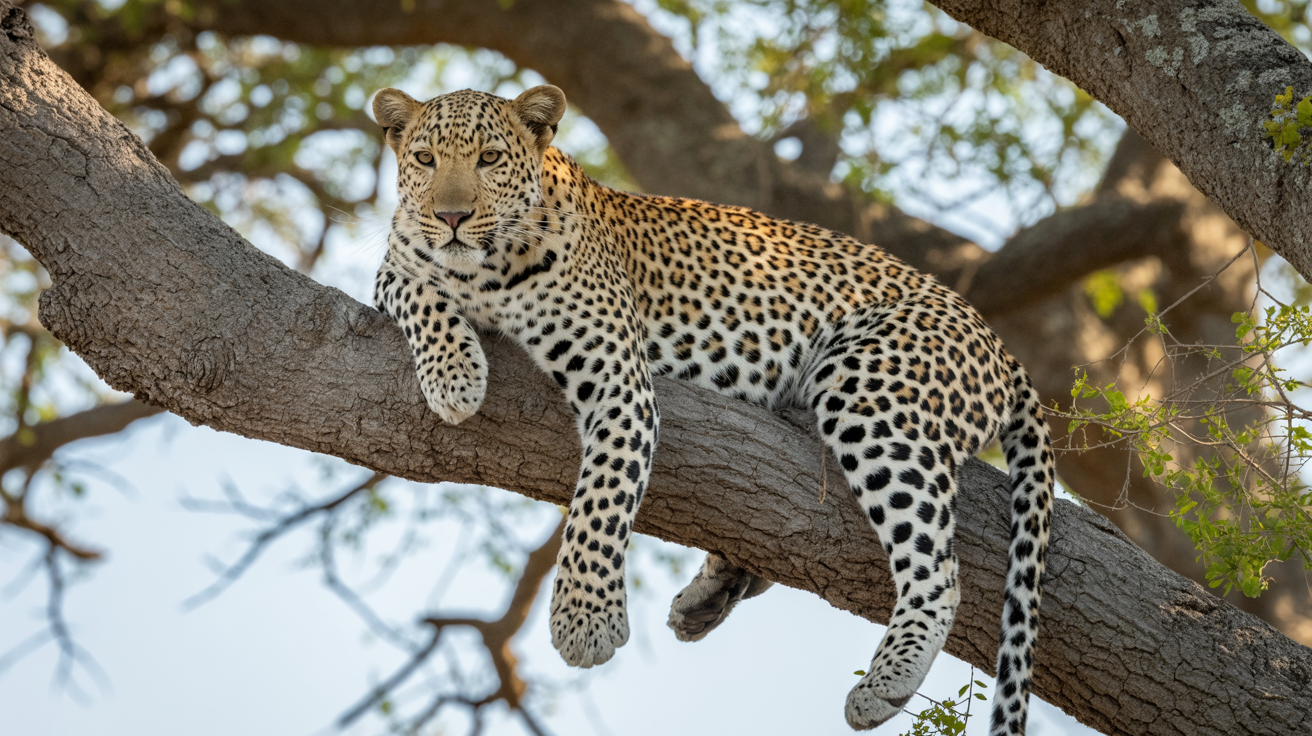
Leopards are solitary, secretive, and arguably the most adaptable big cat. Males weigh up to 90kg but can hoist prey heavier than themselves into trees — extraordinary strength-to-weight ratio. They hunt by ambush, stalking to within metres before an explosive attack. Their spotted coat provides perfect camouflage in dappled light.
Population: uncertain, estimated 250,000-700,000 (most numerous big cat, but hardest to count). Best sightings: Sabi Sands (virtually guaranteed), South Luangwa, Serengeti (Seronera), Moremi. Night drives dramatically increase leopard sighting chances.
The Cheetah: Speed and Fragility
Cheetahs are built for one thing: speed. Their lightweight bodies (40-65kg), deep chests, long legs, and semi-retractable claws make them the fastest land animal at 112km/h. But that speed comes at a cost — they're the weakest big cat, unable to defend kills from lions, leopards, or even hyenas. They hunt in daylight using open grasslands.
Population: ~6,500 wild cheetahs remain — they're more endangered than lions. Best sightings: Serengeti (central plains), Masai Mara, Kruger (open areas), Kgalagadi (Botswana/South Africa), Namibia (the world's largest cheetah population). Cheetah sightings are special — appreciate every one.
Comparing the Three
The simplest distinction: lions are social hunters of the open plains, leopards are solitary ambush predators of the woodland, and cheetahs are solitary sprint hunters of the grasslands. On safari, you'll see lions resting openly, leopards in trees or dense bush, and cheetahs scanning from termite mounds or rocks. Each sighting tells a different story about survival in Africa. Let us design your big cat safari.