

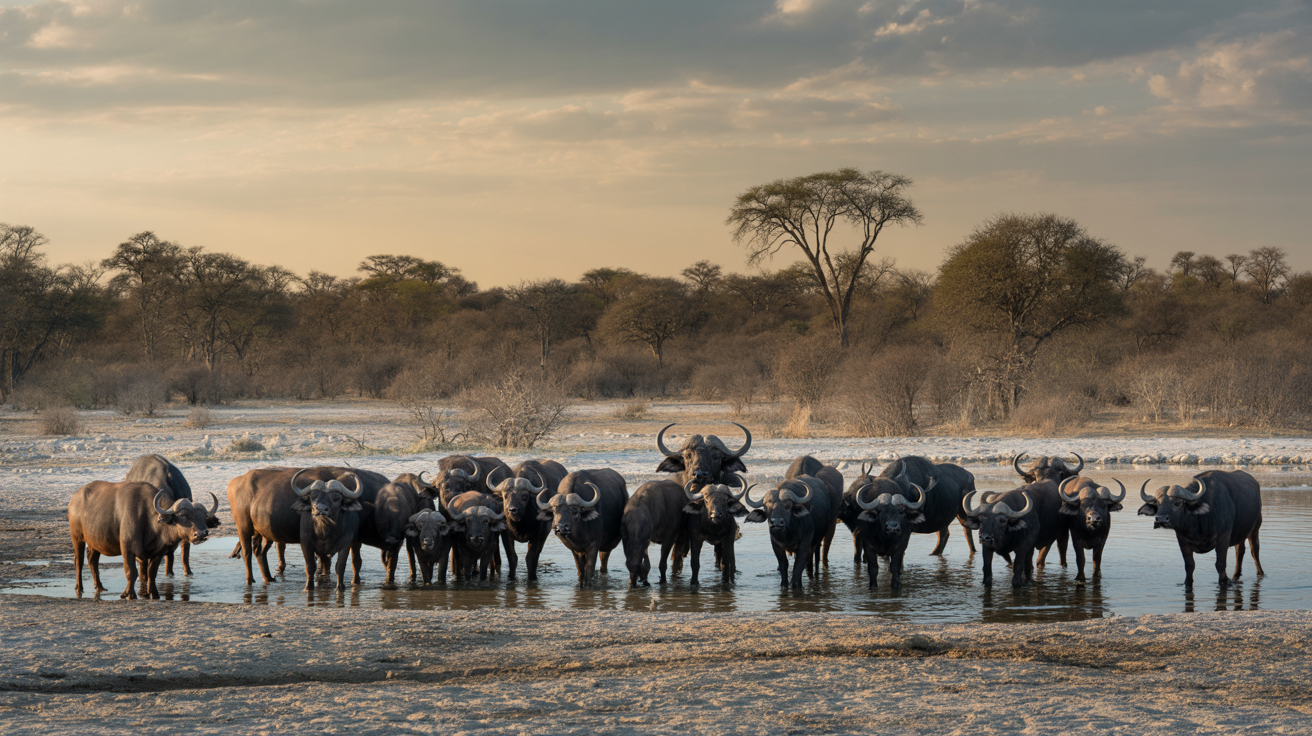
About the African Buffalo
The African buffalo is the most dangerous of the Big 5 to encounter on foot, earning the nickname "Black Death." These powerful bovines form enormous herds and are known for their unpredictable temperament and fierce group defense. A herd of buffalo working together can drive off and even kill attacking lions.
African buffalo are perhaps the most underrated of the Big 5. They lack the glamour of cats or the size of elephants, but they possess something truly remarkable: one of the most complex social systems in the animal kingdom. Buffalo herds make collective decisions through a unique "voting" system — females indicate their preferred travel direction by standing and facing that way, and the herd moves in the direction most females "vote" for. Buffalo have excellent memories and are known to ambush and kill lions that previously attacked their herd — a behavior so deliberate it has been called "grudge killing." Old males that leave the herd (called "dagga boys") are the most dangerous — grumpy, unpredictable, and responsible for more hunter deaths than any other African animal. For safari-goers, watching a massive buffalo herd crossing a river or witnessing a lion-buffalo battle is among the most dramatic spectacles Africa offers.
Height
1.0–1.7 m (3.3–5.6 ft) at the shoulder
Weight
Males: 500–900 kg (1,100–1,980 lbs) | Females: 300–550 kg (660–1,210 lbs)
Top Speed
Up to 57 km/h (35 mph)
Diet
Grass, herbs, shrubs — they need to drink water daily
Habitat
Savannas, swamps, floodplains, and montane grasslands
Social
Massive herds of 50–2,000+; democratic decision-making for herd movement
Gestation
11–11.5 months
Offspring
1 calf per year
Predators
Lions are their primary predator; large herds can defend against and kill lions
Did You Know?
Mind-blowing facts about african buffalos that will make you an instant expert.
Buffalo herds use a democratic "voting" system — females stand facing their preferred direction of travel
Buffalo have been known to deliberately hunt and kill lions that previously attacked their herd
Old solitary males ("dagga boys") are Africa's most dangerous animal to encounter on foot
Buffalo have 4 times the strength of an ox and can overturn a car
They need to drink water at least once daily, never straying far from water sources
A buffalo's boss (the fused horn shield) is strong enough to stop a rifle bullet
Herds can number over 2,000 individuals — one of Africa's greatest spectacles
Buffalo can remember and recognize individuals — including humans who have threatened them
Behavior & Social Life
When a calf is attacked, the entire herd will charge to rescue it — often killing the predator
Buffalo mud-wallow to cool down and protect against parasites and biting insects
Oxpecker birds ride on buffalo, eating ticks and parasites — a classic symbiotic relationship
Buffalo have an incredible sense of smell and can detect predators from over 1 km away
Injured or old buffalo become incredibly aggressive and unpredictable
Where to See African Buffalos
The top countries and national parks for unforgettable african buffalo encounters.
Best National Parks
Kruger National Park
South Africa
Over 40,000 buffalo; frequent lion-buffalo battles; accessible self-drive viewing
Serengeti National Park
Tanzania
Massive herds during the Great Migration; dramatic predator-prey encounters
Katavi National Park
Tanzania
Africa's most underrated park — herds of 2,000+ buffalo in dry season
Chobe National Park
Botswana
Huge herds along the Chobe River; swimming buffalo scenes
Loading map...
Viewing Tips
Waterholes and rivers are the best locations — buffalo need to drink daily
Large herds are easiest to find; solitary "dagga boys" require more careful searching
Watch for oxpecker birds sitting on buffalo backs — they often lead you to herds
Stay in your vehicle — buffalo are unpredictable and extremely dangerous on foot
Lion-buffalo interactions are most common at dawn and dusk
Listen for loud bellowing calls that herds use to communicate
Photography Tips
Capture the massive herd formations from elevated positions when possible
Close-up portraits showing the textured boss (horn shield) are powerful
Oxpecker-on-buffalo moments create charming natural history images
Lion-buffalo confrontations require fast shutter speeds (1/1000+)
Dusty herd movements at golden hour create atmospheric backlit shots
Best Time to See African Buffalos
Buffalo viewing is best during the dry season (June–October) when herds concentrate around water sources. The dry season at Katavi National Park (Tanzania) is legendary — herds of over 2,000 buffalo gather at shrinking pools. Kruger (South Africa) offers year-round buffalo encounters.
Jan
Green season; herds spread out across grasslands
Feb
Wet; calving season with newborns
Mar
Late rains; good grass means fat, healthy herds
Apr
Drying out; herds starting to congregate
May
Early dry season; herds moving to water
Jun
Excellent — massive herds at permanent water
Jul
Outstanding — peak concentrations begin
Aug
Best month — maximum herd sizes at water sources
Sep
Spectacular — dramatic predator-buffalo encounters
Oct
Excellent — last of the dry season; intense activity
Nov
First rains; herds beginning to disperse
Dec
Green season; smaller groups; calving
African Buffalo Safari Packages
Handpicked safari experiences designed for the ultimate african buffalo encounter.
Top African Buffalo Lodges
The world's best safari lodges for african buffalo viewing — luxury meets wilderness.
Singita Lebombo
Kruger, South Africa
Spectacular Big 5 area with frequent buffalo-lion dynamics
Katavi Wildlife Camp
Katavi, Tanzania
Remote wilderness camp with massive buffalo herds
African Buffalo Conservation
Understanding the threats facing african buffalos and how your safari helps protect them.
IUCN Status: Near Threatened
Population trend: stable
African buffalo are classified as Near Threatened by the IUCN, with relatively stable populations. They are less affected by poaching than rhinos and elephants but face threats from habitat loss, disease (bovine tuberculosis, rinderpest), and climate change affecting grasslands. Buffalo play a crucial ecological role as grazers, maintaining grassland ecosystems.
Key Threats
Habitat loss from agricultural expansion
Bovine tuberculosis and rinderpest
Climate change affecting grazing areas
Competition with domestic livestock
Drought and water scarcity
Fragmentation of migration corridors
How Your Safari Helps
Every responsible safari directly funds conservation through park fees, community levies, and lodge conservation contributions. Your visit employs anti-poaching rangers, funds habitat restoration, and provides economic incentives for local communities to protect wildlife.
African Buffalo FAQ
Common questions about african buffalo safaris — answered by our Africa wildlife experts.
The "Big 5" originally referred to the five most dangerous animals to hunt on foot. The African buffalo earned its place because of its extreme unpredictability, herd defense tactics, and tendency to ambush hunters. They are responsible for more deaths among big game hunters than any other African animal.
Other Big Five Animals
Ready for Your African Buffalo Safari?
Our Africa wildlife experts will craft a bespoke safari focused on the most incredible african buffalo encounters. No obligation — just exceptional service.