

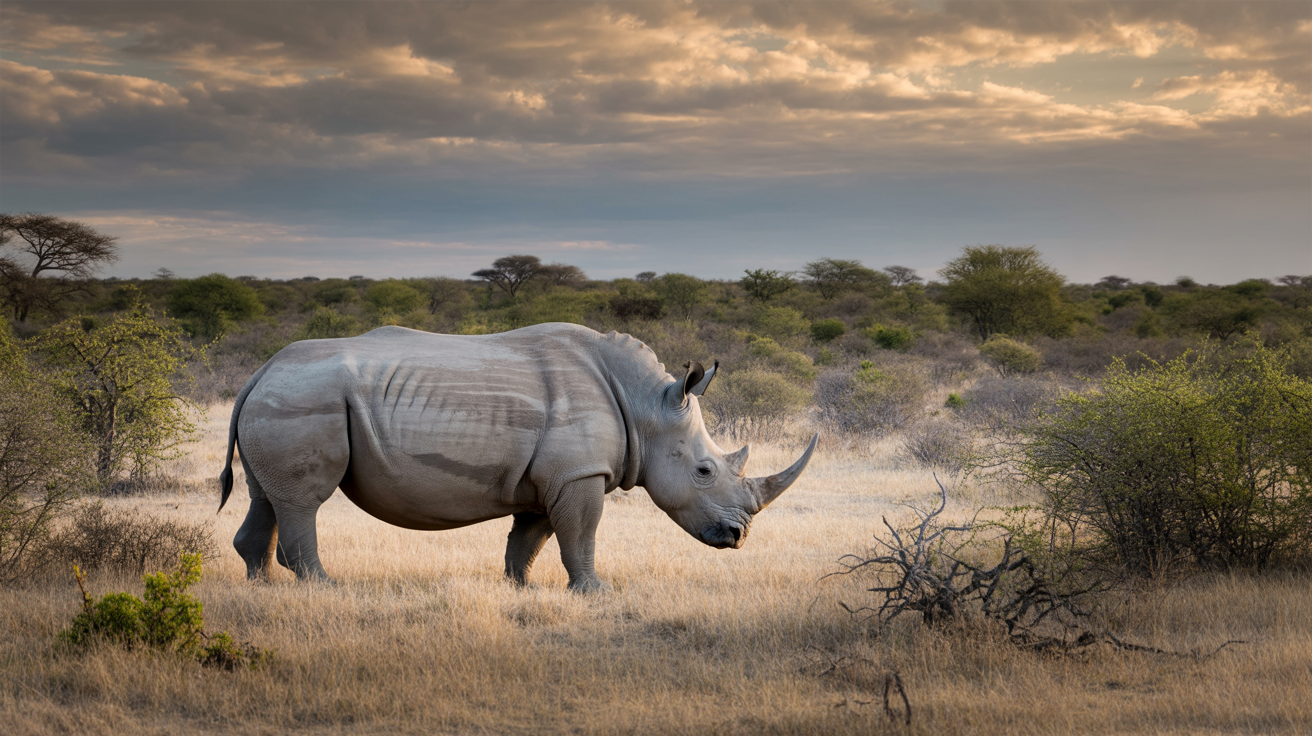
African Rhinoceros Guide
“Armored Tank of Africa” — Diceros bicornis / Ceratotherium simum
Ancient, armored, and critically threatened — the rhinoceros is Africa's most urgent conservation story and a life-defining safari encounter.
About the African Rhinoceros
Africa is home to two rhinoceros species: the white rhinoceros and the critically endangered black rhinoceros. Despite their names, both species are grey — "white" comes from the Dutch word "wijd" (wide), describing the white rhino's wide, square lip. These prehistoric-looking giants have roamed Earth for 50 million years and are now fighting for survival against poaching.
Rhinoceroses are living links to prehistory — their lineage dates back 50 million years to the Eocene epoch. Africa's two species serve different ecological roles: white rhinos are grazers that maintain grasslands (like natural lawnmowers), while black rhinos are browsers that shape woodland structure. The key to telling them apart is the mouth: white rhinos have a wide, flat lip for grazing, while black rhinos have a pointed, prehensile lip for grabbing branches. Both species are targeted by poachers for their horns, which are made entirely of keratin (the same protein as human fingernails) and have no proven medicinal value. Despite this, rhino horn sells for up to $60,000 per kilogram on the black market — more than gold or cocaine. South Africa holds approximately 80% of Africa's remaining rhinos and is the epicenter of the poaching crisis. Conservation efforts have yielded results: white rhino numbers have increased from fewer than 50 in 1895 to over 16,000 today — one of conservation's greatest success stories.
Height
Black: 1.4–1.8 m | White: 1.5–1.8 m at the shoulder
Weight
Black rhino: 800–1,400 kg | White rhino: 1,700–2,300 kg
Top Speed
Up to 55 km/h (34 mph) — surprisingly fast for their size
Diet
Black rhino: leaves, branches, thorny shrubs (browser) | White rhino: grass (grazer)
Habitat
Grasslands, savannas, tropical bushland, and subtropical forests
Social
Mostly solitary; white rhinos sometimes form small groups called "crashes"
Gestation
15–16 months
Offspring
1 calf every 2–5 years
Predators
No natural predators as adults; calves occasionally taken by lions, hyenas, and crocodiles
Did You Know?
Mind-blowing facts about african rhinoceross that will make you an instant expert.
Rhino horn is made of keratin — the same protein as human fingernails; it has no medicinal value
Rhino horn sells for up to $60,000/kg on the black market — more than gold or cocaine
White rhinos were saved from near-extinction: from ~50 in 1895 to ~16,000 today
Rhinos have existed for 50 million years — they are older than humans by 49.7 million years
Despite poor eyesight, rhinos have excellent hearing and sense of smell
A group of rhinos is called a "crash"
Rhinos communicate through dung middens — communal dung piles that serve as information boards
Black rhinos can run at 55 km/h despite weighing over 1,000 kg
Behavior & Social Life
White rhinos are social and often seen in pairs or small groups; black rhinos are more solitary
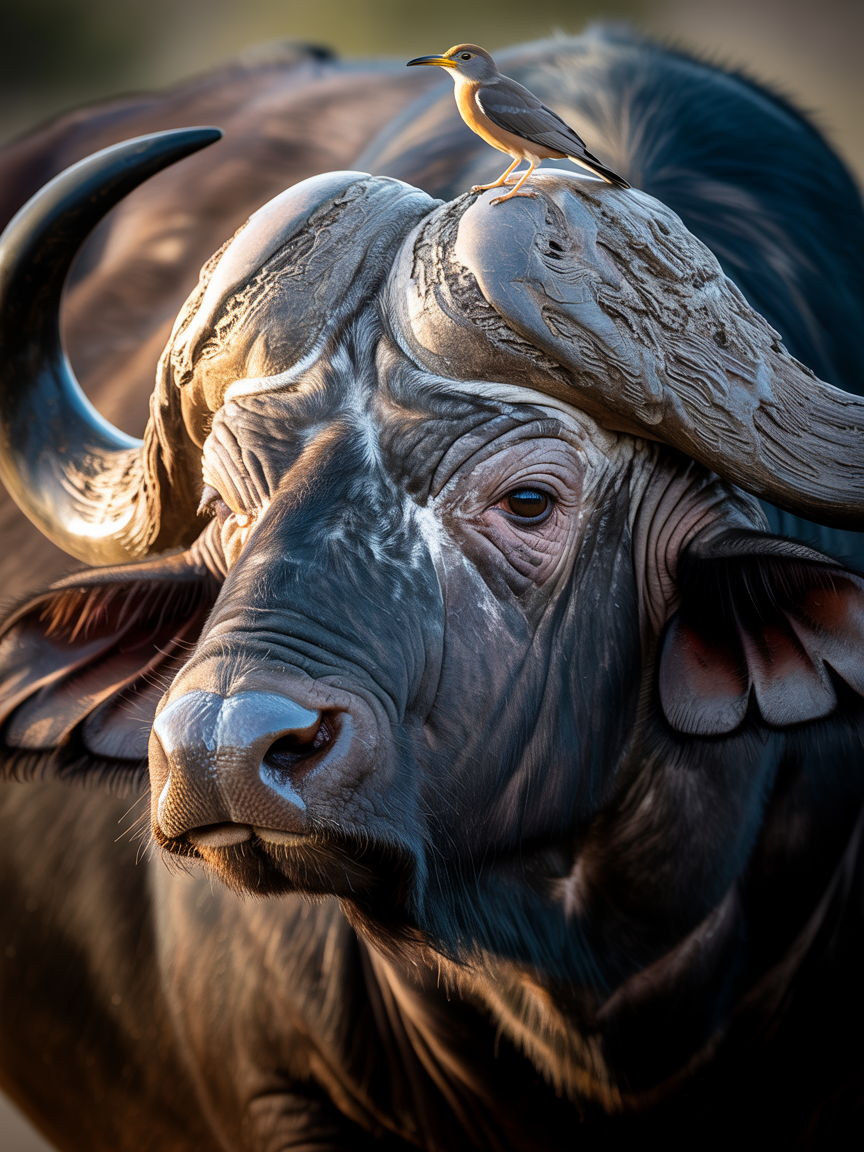
Rhinos have symbiotic relationships with oxpecker birds that remove parasites and alert to danger
They wallow in mud to cool down, protect against sunburn, and remove parasites
Male rhinos use urine spraying and dung deposits to mark territory
Mother rhinos are fiercely protective — they will charge anything threatening their calf
Where to See African Rhinoceross
The top countries and national parks for unforgettable african rhinoceros encounters.
Best National Parks
Hluhluwe-Imfolozi Park
South Africa
Birthplace of rhino conservation — where white rhinos were saved from extinction
Ol Pejeta Conservancy
Kenya
World's largest black rhino sanctuary; home to the last 2 northern white rhinos
Etosha National Park
Namibia
Excellent black rhino sightings at floodlit waterholes at night
Kruger National Park
South Africa
South Africa's largest rhino population; both black and white species
Matobo National Park
Zimbabwe
Walking safaris to track black rhinos with expert guides
Loading map...
Viewing Tips
Hluhluwe-Imfolozi (South Africa) offers the highest probability of rhino sightings
Visit waterholes in the afternoon — rhinos drink and wallow in the heat
Etosha's floodlit waterholes offer magical nighttime rhino encounters
Walking safaris to track rhinos in Matobo (Zimbabwe) are unforgettable
Keep extremely quiet — rhinos have poor eyesight but exceptional hearing
For security reasons, some locations do not disclose exact rhino positions
Photography Tips
Waterhole scenes with rhinos drinking create classic compositions
Close-up horn and texture details tell the conservation story
Mother-calf interactions make emotional, compelling images
Backlit dust scenes as rhinos move create atmospheric photographs
Use a long telephoto (400mm+) as approach distances must be respectful
Best Time to See African Rhinoceross
Rhinos are best viewed during the dry season (May–October) when they visit waterholes more frequently. In South Africa, Hluhluwe-Imfolozi offers year-round sightings. Etosha (Namibia) is exceptional for night-time waterhole viewing where rhinos come to drink under floodlights. Walking safaris for rhinos are available year-round in Zimbabwe and Kenya.
Jan
Green season; rhinos dispersed; good calf sightings
Feb
Wet; vegetation thick but waterholes still visited
Mar
Late rains; rhinos in good condition
Apr
Improving visibility; waterholes becoming important
May
Good — early dry season; increasing waterhole visits
Jun
Excellent — rhinos visiting waterholes frequently
Jul
Outstanding — cool weather; rhinos more active by day
Aug
Best month — dry conditions concentrate rhinos
Sep
Excellent — Etosha waterhole sightings peak
Oct
Good — hot; rhinos at water sources throughout the day
Nov
First rains; dispersal begins
Dec
Green season; harder to spot in dense vegetation
African Rhinoceros Safari Packages
Handpicked safari experiences designed for the ultimate african rhinoceros encounter.
Top African Rhinoceros Lodges
The world's best safari lodges for african rhinoceros viewing — luxury meets wilderness.
Rhino Ridge Safari Lodge
Hluhluwe-Imfolozi, South Africa
The only private lodge in Hluhluwe-Imfolozi; exceptional rhino sightings
Sweetwaters Tented Camp
Ol Pejeta, Kenya
Home to the last northern white rhinos; black rhino sanctuary
African Rhinoceros Conservation
Understanding the threats facing african rhinoceross and how your safari helps protect them.
IUCN Status: Critically Endangered (Black) / Near Threatened (White)
Population trend: increasing
The black rhinoceros is Critically Endangered with approximately 5,500 remaining — though numbers are slowly increasing thanks to intensive conservation. The white rhinoceros is Near Threatened with ~16,000 individuals, but poaching continues at alarming rates. Between 2007 and 2022, over 10,000 rhinos were killed by poachers in South Africa alone. Anti-poaching operations now use military-grade technology: drones, thermal cameras, AI tracking, and armed rangers. Dehorning programs, where rhino horn is safely removed to deter poachers, have also proven effective. Every rhino sighting on safari directly supports conservation — tourism revenue funds anti-poaching operations.
Key Threats
Poaching for horn (primary threat)
Habitat loss from agriculture
Political instability in range countries
Demand for rhino horn in traditional medicine
Small population genetics (inbreeding risk)
Climate change affecting habitat
How Your Safari Helps
Every responsible safari directly funds conservation through park fees, community levies, and lodge conservation contributions. Your visit employs anti-poaching rangers, funds habitat restoration, and provides economic incentives for local communities to protect wildlife.
African Rhinoceros FAQ
Common questions about african rhinoceros safaris — answered by our Africa wildlife experts.
The main difference is the mouth: white rhinos have wide, flat lips for grazing grass, while black rhinos have pointed, prehensile lips for browsing leaves. White rhinos are larger (1,700–2,300 kg vs 800–1,400 kg) and more social. Despite their names, both species are grey — "white" comes from the Dutch word "wijd" (wide).
Other Big Five Animals
Ready for Your African Rhinoceros Safari?
Our Africa wildlife experts will craft a bespoke safari focused on the most incredible african rhinoceros encounters. No obligation — just exceptional service.