

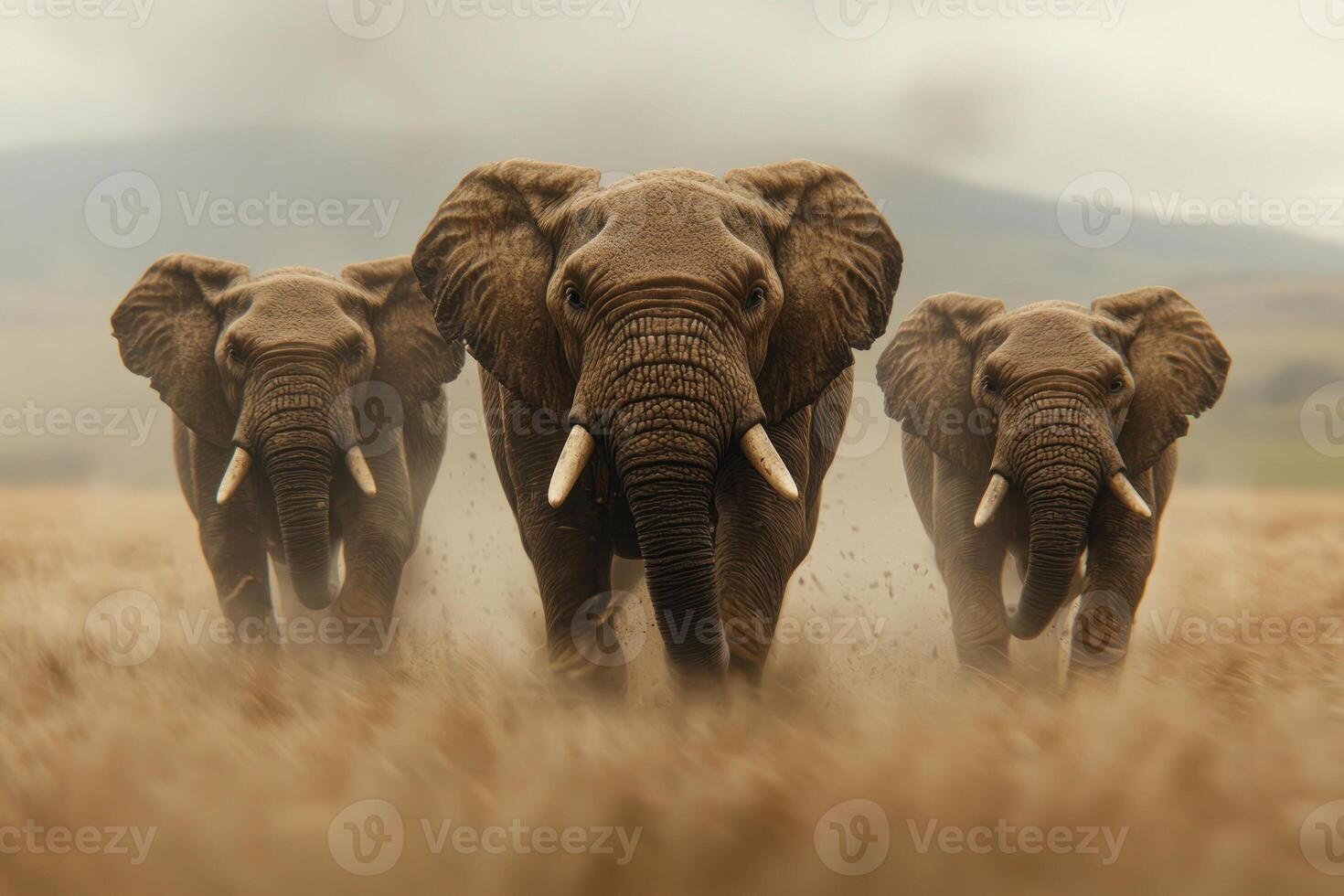
About the African Elephant
The African elephant is the largest living land animal on Earth, weighing up to 6,000 kg. They are among the most intelligent species, displaying complex emotions including grief, joy, compassion, and self-awareness. Elephant herds are led by the oldest female — the matriarch — whose memory of water sources and migration routes ensures the family's survival.
African elephants are ecosystem engineers — they shape the landscape by uprooting trees, creating waterholes, and dispersing seeds across vast distances. Their intelligence rivals that of great apes and dolphins: they recognize themselves in mirrors, mourn their dead, display empathy, and communicate across distances using low-frequency infrasound that humans cannot hear. An elephant's trunk contains over 40,000 muscles and serves as a nose, hand, snorkel, trumpet, and hose all in one. Elephants have the longest pregnancy of any land animal at 22 months, and calves can stand within minutes of birth. Botswana holds the world's largest elephant population (over 130,000), followed by Tanzania, Zimbabwe, and Kenya. The ivory trade remains the greatest threat — an estimated 35,000 elephants are killed by poachers annually, though numbers have improved thanks to international bans and increased enforcement.
Height
3.0–4.0 m (10–13 ft) at the shoulder
Weight
Males: 4,000–6,000 kg (8,800–13,200 lbs) | Females: 2,700–3,600 kg (5,950–7,940 lbs)
Top Speed
Up to 40 km/h (25 mph)
Diet
Grasses, bark, roots, leaves, fruit — up to 150 kg (330 lbs) of vegetation per day
Habitat
Savannas, forests, deserts, marshes — the most habitat-diverse of all megafauna
Social
Matriarchal herds of 10–70 females and young; males live solitary or in bachelor groups
Gestation
22 months — the longest of any land animal
Offspring
1 calf every 4–5 years; twins extremely rare
Predators
No natural predators as adults; calves at risk from lions, hyenas, and crocodiles
Did You Know?
Mind-blowing facts about african elephants that will make you an instant expert.
An elephant's trunk has over 40,000 muscles — more than the entire human body
Elephants can hear other elephants from 10 km away using infrasound vibrations through the ground
They mourn their dead and have been observed revisiting bones of deceased family members
Elephants can recognize themselves in mirrors — one of very few animals with self-awareness
A newborn elephant calf weighs approximately 120 kg (265 lbs) and can stand within 20 minutes
Elephants communicate using over 70 different vocalizations plus body language and seismic signals
They consume up to 150 kg of food and drink up to 190 liters of water daily
Elephants have the longest pregnancy of any land mammal — 22 months
Behavior & Social Life
Matriarchs can be 60+ years old and possess irreplaceable knowledge of water sources and migration routes
Elephants greet each other with trunk touches and rumbles — similar to a human handshake
They throw dust on themselves for sun protection and parasite removal
Elephant calves suck their trunks like human babies suck their thumbs
When a family member dies, elephants may stand vigil for days and return to the bones years later
Where to See African Elephants
The top countries and national parks for unforgettable african elephant encounters.
Best National Parks
Chobe National Park
Botswana
Over 50,000 elephants — the highest concentration on the planet; boat safaris on the Chobe River
Amboseli National Park
Kenya
Iconic elephants with Mt Kilimanjaro backdrop; world's longest-running elephant research project
Tarangire National Park
Tanzania
Herds of 300+ elephants during dry season; baobab-studded landscapes
Hwange National Park
Zimbabwe
Over 40,000 elephants; excellent waterhole viewing platforms
Addo Elephant National Park
South Africa
Africa's most accessible elephant park; malaria-free; year-round sightings
Loading map...
Viewing Tips
Visit waterholes in the afternoon — elephants drink, bathe, and play in the water
Boat safaris in Chobe (Botswana) offer unique water-level perspectives of drinking herds
Keep a respectful distance — elephants can charge if they feel threatened
Watch for "mock charges" — elephants spread their ears and raise their trunks as a warning display
Listen for low-frequency rumbles — elephants communicate using sounds below human hearing
Stay especially cautious around mothers with young calves — they are highly protective
Photography Tips
Wide-angle shots of herds against landscapes (16–35mm) create stunning scene-setters
Backlit elephants at sunset create dramatic silhouette images
Close-up trunk and eye detail shots require 200–400mm lenses
Dust bath moments create incredible action photographs
Include Mount Kilimanjaro in Amboseli shots for the ultimate postcard image
Best Time to See African Elephants
Elephants are best viewed during the dry season (June–November) when they congregate around permanent water sources. Chobe River (Botswana) and Tarangire (Tanzania) are legendary for dry season elephant gatherings — herds of hundreds drinking and bathing together. The green season offers excellent viewing of newborn calves.
Jan
Green season; herds dispersed but calf sightings excellent
Feb
Wet season; elephants spread across landscape
Mar
Late rains; elephants starting to concentrate
Apr
Improving as water sources reduce
May
Early dry season; herds moving toward permanent water
Jun
Excellent — large gatherings at waterholes begin
Jul
Outstanding — massive herds at rivers and waterholes
Aug
Peak viewing — 100+ elephants at Chobe River daily
Sep
Spectacular — driest month; maximum concentration
Oct
Excellent — heat drives elephants to water all day
Nov
First rains; herds begin to disperse; newborn calves
Dec
Green season; beautiful scenery; smaller groups
African Elephant Safari Packages
Handpicked safari experiences designed for the ultimate african elephant encounter.
Top African Elephant Lodges
The world's best safari lodges for african elephant viewing — luxury meets wilderness.
Chobe Game Lodge
Chobe, Botswana
Botswana's only permanent lodge inside a national park; elephants at your doorstep
Tortilis Camp
Amboseli, Kenya
Kilimanjaro views with elephants; eco-luxury tented camp
African Elephant Conservation
Understanding the threats facing african elephants and how your safari helps protect them.
IUCN Status: Endangered
Population trend: decreasing
African savanna elephants were reclassified as Endangered by the IUCN in 2021 (previously Vulnerable). Populations have declined by over 60% in the last 50 years, primarily due to poaching for ivory and habitat loss. The international ivory ban (CITES) has helped, but illegal trade persists. Conservation efforts focus on anti-poaching patrols, habitat corridors, community-based conservation, and reducing human-elephant conflict. Botswana, Kenya, and Tanzania lead in elephant protection programs.
Key Threats
Ivory poaching (35,000 elephants killed annually at peak)
Habitat loss due to agriculture and urbanization
Human-elephant conflict over crops and water
Climate change affecting water availability
Infrastructure development blocking migration corridors
Trophy hunting in some regions
How Your Safari Helps
Every responsible safari directly funds conservation through park fees, community levies, and lodge conservation contributions. Your visit employs anti-poaching rangers, funds habitat restoration, and provides economic incentives for local communities to protect wildlife.
African Elephant FAQ
Common questions about african elephant safaris — answered by our Africa wildlife experts.
Botswana has the world's largest elephant population with over 130,000 animals. Chobe National Park alone hosts 50,000+ elephants. Other top destinations include Tarangire (Tanzania) with herds of 300+, Amboseli (Kenya), and Hwange (Zimbabwe) with 40,000+ elephants.
Other Big Five Animals
Ready for Your African Elephant Safari?
Our Africa wildlife experts will craft a bespoke safari focused on the most incredible african elephant encounters. No obligation — just exceptional service.